
-
-

Liberty Factory. The untold story of Henry Kaiser’s Oregon shipyards
49,95 €Churchill famously claimed that the only thing that had really frightened him during the war was the Battle of the Atlantic. Keeping open the lifeline between the US arsenal of democracy and the UK was essential to preparations for the invasion of Europe and in the final analysis this came down to building merchant ships faster than German U-boats could sink them.
Crucial to this achievement was the Liberty ship, a simple freighter that could be built rapidly, combined with the untapped industrial potential of the USA that could build them in vast numbers. Undoubtedly the most important individual in the rapid expansion of US wartime shipyard capacity was Henry Kaiser, a man with no previous shipbuilding experience but an entrepreneur of vision and drive. This book tells the story of how he established huge new yards using novel mass-production techniques in the most surprising location Oregon, one of the least industrially developed areas of the US and one without an existing pool of skilled labour to draw on.
It was not just the yards that were revolutionary, as the Kaiser companies provided housing, health and welfare benefits that attracted workers from all over the country, including women recruited into an industrial workplace for the first time. This well-motivated workforce turned the Kaiser yards into the most efficient shipbuilders in the country. In total Kaisers Oregon yards built over 450 Liberties and the follow-on Victory ships including one built in the record time of 10 days as well as around 150 tankers, some 50 escort carriers and countless amphibious warfare ships. Curiously, this truly remarkable achievement, of huge significance to the eventual Allied victory, has been consigned to the footnotes of history, but is fully documented and celebrated for the first time in this book.
200 b/w illustrations. -
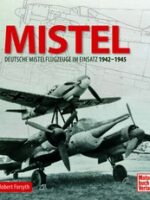
MISTEL – Deutsche Mistelflugzeuge im Einsatz 1942 – 1945
39,90 €An informative and illustrated volume about the mysterious mistletoe concept. It was originally known as mistletoe towing, in which a smaller powered aircraft was first mounted on a larger cargo glider. In the course of development, the cargo glider was replaced by converted bombers with their own propulsion. The focus is on the German developments of the Second World War, where the method was developed militarily very far and also used.
This German translation is based on the 2nd revised and enlarged English edition!!! -
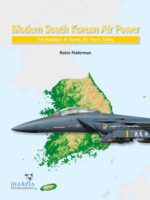
Modern South Korean Air Power | The Republic of Korea Air Force Today
39,95 €Since the early 1950s, the heavily industrialised nation of South Korea has seen steady growth and is now the worlds seventh-largest exporter and 11th-largest economy overall. As the Cold War on the Korean peninsula gathered momentum, the development of the Republic of Korea Air Force became one of the nations top priorities. While initially dependent on the United States for its aircraft, Koreas aviation industry has matured rapidly, and the ROKAFs use of indigenously manufactured equipment is on the rise.
Modern South Korean Air Power provides a detailed look at the aircraft and armament, as well as the organisation and the modernisation process of the ROKAF. The air arm has invested heavily in its early warning and intelligence-gathering capability to guard against the unpredictability of its northern neighbour.
A territorial dispute with long-standing rival Japan, as well as incursions into its airspace by both China and Russia, have fuelled the need to transform the ROKAF into a technologically superior force.
In its ongoing efforts to maintain its edge, the ROKAF has introduced fifth-generation stealth fighters while at the same time still making effective use of obsolete biplanes. It is this wide variety of aircraft and helicopters that make this air arm one of a kind.
This book is a highly informative and richly illustrated source of reference and documents the ROKAF in a previously unavailable degree of detail. It provides an insightful and in-depth look at the journey the service has embarked upon to face the regional security challenges of tomorrow.
With 2 b/w and 179 colour pictures, 8 tables and graphs plus 2 maps.