
-

Flugzeug Profile Heft 69: Republik RF-84F Thunderflash
13,80 €The F-84 series was one of the most significant Western aircraft developments of the 50s. The prototype of the RF-84 series, the YRF-84, made its maiden flight in February 1952. The first machines followed in March 1954.
The German Air Force took delivery of a total of 108 RF-84Fs, becoming the largest operator outside the United States. It was planned to set up three reconnaissance squadrons. However, due to a lack of trained pilots, this plan could not be realized.
This issue deals comprehensively with the operational history of the RF-84F Thunderflash in the Air Force.
66 b/w pictures, 32 colour pictures, 20 colour graphics as well as b/w drawings. -

Flugzeug Profile Heft 70: Junkers Ju 87 G Der Kanonenvogel
13,80 €The last variant of the Ju 87 Stuka and successor of the Junkers Ju 87D was the Ju 87G series. This Stuka variant was produced only by conversions of the ubiquitous D models.
The Ju 87G was a version specially designed for anti-tank combat with two BK 3.7-cm cannons mounted in gondolas under the inner wings right next to the landing gears. These 37-mm guns were extremely effective weapons weighing over 360 kg and were also widely used by anti-aircraft artillery.
In June 1942, an experimental setup was tested on a converted Ju 87D-5 and proved more effective than the German Luftwaffe’s other antitank aircraft – such as the Henschel Hs 129 or Junkers Ju 88P. With an ammunition supply of one loading strip containing six shells, the BK 3.7 fired armor-piercing ammunition at a projectile velocity of over 850 meters per second.
On 48 pages, Gerhard Lang presents a detailed account of the technical development and front-line use of the cannon bird. -

Flying Colours of Richard J. Caruana. Bookazine Collection: 1
22,95 €During the last decade or so a considerable number of requests were received, especially from the younger generation, for me to put together a cross-section of my work into a book. Truly an impossible task considering the thousands of illustrations produced over these fifty years. It was therefore with this in mind that Im embarking on this voyage of memories that will hopefully be met with approval by both those who remember the drawings in now-defunct or difficult to find publications and also those too young to have had the opportunity of enjoying them. It also gave me the chance to update older illustrations to todays standards.
Contents:
Airco DH2, RAF S.E.5a, Seversky P-35, Short Stirling, IMAM Ro.43, Desert 109s JG27, Douglas F4D, Skyray, Fleet Air Arm Phantoms, John Livingstone Boyd -
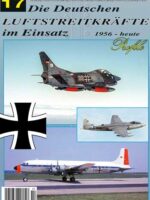
Luftstreitkräfte Profile 17: Die dt. Luftstreitkräfte im Einsatz
13,80 €The history of the German Air Force (Luftwaffe – Army Aviation – Navy Aviation) has hardly been dealt with in a comprehensive manner since it was compiled in 1956. This new series aims to present the history and development of these separate areas of the German Armed Forces.
The main focus of the 17th edition is on the history of the training and experimental wing G. 91 of the Waffenschule 50. Another extensive topic is the use of the Douglas DC 6 as the first long-haul aircraft of the air force. On the part of the NVA, Jagdgeschwader 9 Heinrich Rau is dealt with and in the subject area of naval aviation, the story of the Sea Hawk, the first jet-powered aircraft used by naval aviation, is told.
Throughout illustrated with colour pictures. -
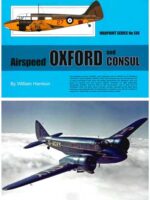
Warpaint No. 136: Airspeed Oxford and Consul
24,80 €With more than 8,750 built the Oxford was a well thought-out design that was based on their Airspeed Envoy, a similar shaped twin-engine executive air-craft that was used in the early 1930s but the more advanced design of the Oxford suited the military requirement for a three-seat training aircraft.
The Oxford was a low-wing cantilever monoplane of advanced design and was produced for the training of pilots in handling modern, multi-engine bomber aircraft. Wooden construction was employed throughout making for a simpler design and easier repairs.
Provision was made for instruction in pilot training, aerial photography, navigation and bombing training. An Armstrong-Whitworth gun turret could be installed for training in aerial gunnery.
After the War the Consul was conceived as a small airliner, chief-ly converted from ex-military Oxfords with more than 160 rebuilt. These quickly sold to potential airline operators and were eventually used in many countries, some changing hands four or five times.
The Oxford and the Consul were relatively safe flying machines and with thousands of bomber pilots undertaking their flying training in the type it played a major part in the RAF’s war effort, and is widely regarded as a design the manufacturers could be proud of.
Throughout illustrated with about 150 b/w pictures, 8 pages of colour profiles as well as 2 pages with b/w drawings in scale 1/72.