-
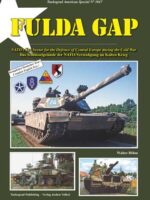
Tankograd American Special 3047: Fulda Gap. Das Schlüsselgelände der NATO-Verteidigung im Kalten Krieg
18,95 €During the Cold War, the Fulda Gap, at the inner-German border, was one of the hottest points of potential contact between the military alliances of NATO and the Warsaw Pact. If it had actually come to a war, the East Hessian region would have become the gateway for Warsaw Pact troops to enter the metropolitan region of Frankfurt. Overrunning West Germany was scheduled to take only five to seven days, and within fifteen days the Warsaw Pact wanted to be on the French coast to prevent American and British main forces from landing there by sea.
This publication shows the planned defence of the Fulda Gap by the US Army exemplary with the exercises Caravan I 1972, REFORGER 81 Certain Encounter and REFORGER 83 Confident Enterprise. This is illustrated with a large number of hitherto unpublished photographs of the US vehicles that were ready for the defence against the aggressor from the east.
Illustrated with 50 b/w photographs, 72 colour photographs and 8 graphics. -
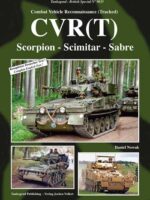
Tankograd British Special No. 9033: CVR(T) Scorpion-Scimitar -Sabre
14,95 €Development of vehicles of the CVR(T) family and their introduction into service with the British Army 50 years ago can be considered a revolution in the field of conducting armoured reconnaissance. Never before had the attributes of mobility, speed, protection and firepower been combined so perfectly in one type of vehicle. Being constantly upgraded, they are still capable of performing their tasks under the current military mission range, despite the fact that they have been in service for half a century already. In the coming decade the British military will successively replace the CVR(T)s. Despite this, the story of this vehicle family is far from over. Latvia decided to procure CVR(T)s from British surplus stocks – as a result, the type will be part of the fleet of NATO combat vehicles for years to come.
This double volume publication, lavishly illustrated with no less than 260 colour and black&white photos plus graphics on a total of 128 pages describes the development history and technology, yet first and foremost the use of the many CVR(T) family vehicles on exercise. Volume One (Special 9033) covers the Scorpion, Scimitar and Sabre reconnaissance vehicles while Volume Two (Special 9034) deals with the variants such as the Striker, Spartan, Samaritan, Sultan, Samson, Stormer and Shielder.
Illustrated throughout with 122 colour photographs, 26 b/w photos and 10 graphics. -
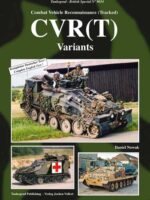
Tankograd British Special No. 9034: CVR(T), Variants
14,95 €Development of vehicles of the CVR(T) family and their introduction into service with the British Army 50 years ago can be considered a revolution in the field of conducting armoured reconnaissance. Never before had the attributes of mobility, speed, protection and firepower been combined so perfectly in one type of vehicle. Being constantly upgraded, they are still capable of performing their tasks under the current military mission range, despite the fact that they have been in service for half a century already. In the coming decade the British military will successively replace the CVR(T)s. Despite this, the story of this vehicle family is far from over. Latvia decided to procure CVR(T)s from British surplus stocks – as a result, the type will be part of the fleet of NATO combat vehicles for years to come.
This double volume publication, lavishly illustrated with no less than 260 colour and black&white photos plus graphics on a total of 128 pages describes the development history and technology, yet first and foremost the use of the many CVR(T) family vehicles on exercise. Volume One (Special 9033) covers the Scorpion, Scimitar and Sabre reconnaissance vehicles while Volume Two (Special 9034) deals with the variants such as the Striker, Spartan, Samaritan, Sultan, Samson, Stormer and Shielder.
Illustrated throughout with 105 colour photographs, 7 b/w photos and one organisational chart. -
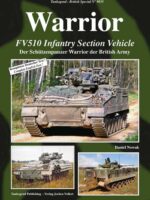
Tankograd British Special No. 9035: WARRIOR. Der Schützenpanzer Warrior der British Army
18,95 €As early as 1967 the first proposals for a concept of requirements for a new armoured infantry fighting vehicle were collected in the United Kingdom. The late 1970s saw the concept taking shape under the designation MCV-80 (Mechanised Combat Vehicle for the 80s) and in 1985 the vehicle was given its official name Warrior. Since 1987 the Warrior serves as the backbone of British armoured infantry units. This double volume publication, lavishly illustrated with 250 photos on a total of 128 pages describes the development, technology and army service of the Warrior Infantry Section Vehicle (Special 9035) as well as the variants, the operations and the upgrade programmes of the entire Warrior family of vehicles (Special 9036).
FV510: Warrior Infantry Section Vehicle (ISV)
FV511: Warrior Infantry Command Vehicle (ICV)
FV512: Warrior Mechanised Combat Repair Vehicle (MCRV)
FV513: Warrior Mechanised Recovery Vehicle (Repair) (MCV(R))
FV514: Warrior Mechanised Artillery Observation Vehicle (MAOV)
FV515: Warrior Battery Command Vehicle (BCV)
Illustrated throughout with 125 colour photographs, 8 b/w photos and 5 graphics. -
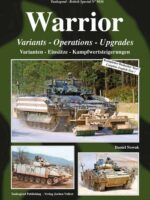
Tankograd British Special No. 9036: WARRIOR. Varianten – Einsätze – Kampfwertsteigerungen
18,95 €As early as 1967 the first proposals for a concept of requirements for a new armoured infantry fighting vehicle were collected in the United Kingdom. The late 1970s saw the concept taking shape under the designation MCV-80 (Mechanised Combat Vehicle for the 80s) and in 1985 the vehicle was given its official name Warrior. Since 1987 the Warrior serves as the backbone of British armoured infantry units. This double volume publication, lavishly illustrated with 250 photos on a total of 128 pages describes the development, technology and army service of the Warrior Infantry Section Vehicle (Special 9035) as well as the variants, the operations and the upgrade programmes of the entire Warrior family of vehicles (Special 9036).
FV510: Warrior Infantry Section Vehicle (ISV)
FV511: Warrior Infantry Command Vehicle (ICV)
FV512: Warrior Mechanised Combat Repair Vehicle (MCRV)
FV513: Warrior Mechanised Recovery Vehicle (Repair) (MCV(R))
FV514: Warrior Mechanised Artillery Observation Vehicle (MAOV)
FV515: Warrior Battery Command Vehicle (BCV)
Illustrated throughout with 125 colour photographs, 8 b/w photos and 5 graphics. -
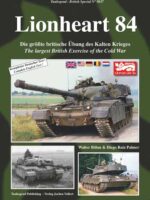
Tankograd British Special No. 9037: Lionheart 84 Die größte Britische Übung des Kalten Krieges
18,95 €Exercise Lionheart ran for little over a month, from 03 September till 05 October 1984. It comprised three phases: a deployment phase (Full Flow), the employment phase (FTX Spearpoint) and a redeployment phase (Full Flow). Lionheart was the largest British Cold War exercise and designed to stress like never before the British Army’s operational capacity to augment its forces in West Germany and to defend successfully the I (BR) Corps sector against the backdrop of a more threatening Warsaw Pact posture.
This publication shows the vehicles of the British Army in action with many impressive photos including those of the then new vehicle types such as the Challenger 1, the Saxon, the MCV-80 (Warrior) and the Tracked Rapier. Furthermore the vehicles of the participating West German, Dutch and American units are covered.
Illustrated throughout with 87 colour photos, 45 b/w photos and 5 graphics. -
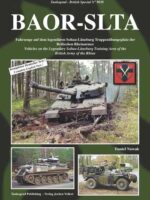
Tankograd British Special No. 9038: BAOR-SLTA. Fahrzeuge auf dem legendären Soltau-Lüneburg Truppenübungspl.
18,95 €On 01 July 1963 the Soltau-Lüneburg Agreement between West Germany, Canada and the UK on the use of German land for exercises came into force. The Soltau-Lüneburg Training Area (SLTA) was born. More than 30 years later the last exercise in the area of the SLTA was conducted in May 1994. On 08 June 1994, the Union Jack was taken down for good in front of the headquarters on the grounds of Camp Reinsehlen.
This publication, for the first time, allows to take a closer look at the SLTA in Northern Germany and in particular its British military vehicles (from Landy to Rhino) training there. During the Cold War the SLTA was unique in Central Europe, and this publication allows to embark on a journey through time to visualize a vital part of the history of the BAOR (British Army of the Rhine).
Illustrated throughout with 130 colour photos, 16 b/w photos and 10 graphics. -

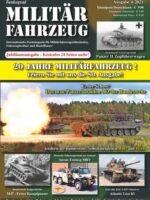
Tankograd Militärfahrzeug 1/2023: Panzerhaubitze 2000
11,95 €Waffensysteme der Bundeswehr: Panzerhaubitze 2000
Leoparden International: Norwegen testet Leopard 2A7V
Manöver Gute alte Zeit: Hold Fast 1960 – Kampf um Schleswig-Holstein
Deutsche Rüstungsprodukte: Belgische Leopard-1-Familienfahrzeuge
Museen & Events & Sammlerszene: Heartland Museum
Waffensysteme der Bundeswehr: Puma im Bahntransport
Museen & Events & Sammlerszene: Museum Jambol – Das Panzer-Biotop
Manöver Gute alte Zeit: Compact Heath Celestial Fire 95
US Army: Pionierpanzer Grizzly
Militärfahrzeuge International: Bodenfahrzeuge der japanischen Luftwaffe
Fahrzeug – Historie der Wehrmacht: Matador Beute-LKW
Museen & Events & Sammlerszene: Panzermuseum Poznan -

Tankograd Militärfahrzeug 2/2022: Leopard 2A7V
11,95 €Aus der Redaktion: Aktuelle Information zur MFZ
Aufgeschnappt: M1074 JABS
Waffensysteme der Bundeswehr: LEOPARD 2A7V – Neuer Kampfpanzer der Bw
Museen&Events&Sammlerszene: Muzeum Oreza Polskiego Kolobrzeg
NATO-Verbände: Neues DEU/GBR Pionierbrückenbataillon 130
Waffensysteme der Bundeswehr: Neues Tarnkleid für Gefechtsstandtrupp 3
US Army: TASK FORCE WARRIOR 95
Manöver ‚Gute alte Zeit‘: Bw-Brigadekonzept im Härtetest: Keen Blade 63
British Army: GRIZZLY Quad
Deutsche Rüstungsprodukte: Belgischer MPPV Dingo 2
Museen&Events&Sammlerszene: 28 cm K5 im Musee du Mur de L‘ Atlantique
Fahrzeug – Historie der Wehrmacht: Daimler-Benz L 1500 A Mannschaftswagen
US Army: Hounds of Hell Markierungssystem M1A1 FEB
Museen&Events&Sammlerszene: Muzeum Regionalne Debica
Format A4, throughout illustrated, quarterly issue. -

Tankograd Militärfahrzeug 3/2022
11,95 €NATO-Ostflanke – Sonderbericht I: Bundeswehr im Manöver:
1. (GE) Panzerdivision übt NATO-Verteidigung
US Army: Panzertransporter-Legende DRAGON WAGON
Museen – Events – Sammlerszene: Museum Orla Bialego
NATO-Ostflanke – Sonderbericht II: US Reaktion auf die neue Bedrohung
M1A2 SEP V2 mit Zusatzpanzerung
Panzertransporter EHETS
NATO-Verbände: Neues DEU/GBR Pionierbrückenbataillon 130
British Army: PINZGAUER LKW
Manöver Gute alte Zeit: BRIDGEX 78
NATO-Ostflanke – Sonderbericht III: Flakpanzer GEPARD für die Ukraine?
NATO-Ostflanke – Sonderbericht IV: Bundeswehr im Manöver:
Deutsche Speerspitze der NATO
Fully illustrated. -
-

Tankograd Militärfahrzeug Jahrbuch. Gepanzerte Fahrzeuge der Bundeswehr 2022
19,90 €The Tankograd-YEARBOOK provides an overview over the in-service armoured vehicles of the Modern German Army and updates Tankograd’s vehicle monographs published over the past years by describing and listing all main types, their variants, showing technical data of the basic variant and all quantities in service.
112 new and hitherto unpublished colour photos – New vehicles and updated information.
Illustrated with 184 colour photos. -

Tankograd Militärfahrzeug Spezial 5090: DACHS Der Pionierpanzer 2 in der Bundeswehr
14,95 €After the failure of the project to develop the Armoured Engineer Machine and to close the existing equipment gap in the Bundeswehr’s Engineer Corps, a solution was sought and found in the Pionierpanzer 2A0 Dachs AEV. The first of its kind was handed over in 1989. The early 2000s saw new equipment introduced and led to the new storage concept (Neues Verstaukonzept, or NVK) and from 2006 the new Pionierpanzer 2A0 NVK Dachs was fielded. Up till March 2021 a total of eleven Dachs armoured engineer vehicles were equipped with the Command and Weapon Engagement System Land-Based Operations (FUEWES LBO) and designated Pionierpanzer 2A0A2 FUEWES LBO Dachs.
This publication shows the three Dachs (badger) variants in action and takes a highly detailed look at their vehicle technology and specialised engineer equipment.
Illustrated throughout with 149 colour photographs, 6 b/w photos, 12 graphics and one five-perspective 1/35 scale drawing. -

Tankograd Militärfahrzeug Spezial 5091: PUMA VJTF Der neue Schützenpanzer der Very High Readiness Joint Task Force L
18,95 €The Puma VJTF – as the most modern version of an armoured infantry fighting vehicle within the German Bundeswehr – is specially adapted to the threats and challenges of the modern battlefield and outperforms its predecessor variant in command, reconnaissance, effectiveness and the support of its mounted and dismounted forces. As a fully digitized combat vehicle, it also forms the basis of the Armoured Infantry Soldier and is capable of seamlessly integrating the expanded Infantryman of the Future system. The Puma’s new weapon systems, such as the MELLS anti-tank guided missile, not only enable more firepower, but also allow unrestricted day and night operations, on the move and with greater range. In consequence, the Puma VJTF combines the principle of fire and movement with improved armour and a multifunctional self-protection system.
This publication shows the new Puma armoured infantry fighting vehicle in its current VJTF configuration for the very first time in service and in great technical detail.
Illustrated throughout with 200 colour photographs and 10 graphics. -

Tankograd Militärfahrzeug Spezial 5092: Leopard 2A7V Der Beste Kampfpanzer der Welt
18,95 €On 05 May 2017, the Bundeswehr and Krauss-Maffei Wegmann (KMW) signed a contract for the combat capability upgrade of 20 in-service Leopard 2A7s to the 2A7V design standard, as well as the production and delivery of 84 additional Leopard 2A7V tanks between 2020 and 2023. As was the case with the 2A7, the comprehensive modifications to the 2A7V – which primarily affect the areas of protection, mobility, controllability, endurance and firepower – consist of both performance-enhancing measures and complementary ones.
This publication shows the Leopard main battle tank in its most modern combat upgrade configuration 2A7V for the very first time in service and in great technical detail.
Illustrated throughout with 200 colour photographs. -

Tankograd Militärfahrzeug Spezial 5093: PANZERTRUPPE – German Armored Vehicles Today
18,95 €Due to its firepower, mobility, thrust, protection, assertiveness and command capability, the Panzertruppe (German Armour Corps) is particularly well suited for decisive combat. Its structure and equipment enables it to conduct long-range attacks, or fast and powerful attacks with a closer target. In addition, the Panzertruppe serves to conduct and support national and alliance defence measures, as well as international conflict prevention and crisis management. The main task of main battle tanks of the Panzertruppe is to fight against enemy tank formations in open terrain.
Today, as in the early days of the Bundeswehr, the Panzertruppe is the backbone of mechanised forces of the Bundeswehr. Its main weapon system today is the Leopard 2 main battle tank and it also fields an impressive range of wheeled and tracked support vehicles. This publication offers, for the first time ever, a comprehensive visual overview on the various state-of-the-art vehicles used by the Panzertruppe today, from motorcycle to main battle tank, illustrates the organisation of a German armour battalion and tells the story of the Bundeswehr’s armour battalions active today.
Quantity Photos and Illustrations:
Illustrated throughout with 142 colour photographs and 15 graphics. -

Tankograd Militärfahrzeug Spezial 5094: Cold War Warrior LEOPARD 1 Kampfpanzer Leopard 1 der Bundeswehr auf Manöver im Kalten Krieg
18,95 €At the end of the 1950s, the German Bundeswehr decided to replace its M 47 M 48 tanks of American origin as soon as possible with a new main battle tank built in West Germany. In many respects, the American designs did no longer correspond with German tactical ideas and operational requirements for the Central European theatre of operations. Thus, starting from scratch again, West Germany began new tank construction. As early as November 1956, the army’s joint staff had already formulated its requirements for the first German tank design, Kampfpanzer Standard or standardised concept tank, since World War Two. Finally, on 09 September 1965, the first German post-war tank design, the series-produced and aptly named Leopard main battle tank was handed over to the Panzertruppe.
This publication shows, with impressive action photos, the Leopard 1s of the Bundeswehr in NATO exercises during the Cold War, among them for example Schneller Wechsel 74, Nassauer Löwe 76, Standhafte Chatten 77, Wehrhafte Löwen 83, Sichere Festung 84, Schwerer Dampfhammer 86 plus REFORGER exercises and more.
Illustrated throughout with 79 colour photographs, 41 b/w photographs and 20 graphics. -

Tankograd WW1 Special 1010: Lastkraftwagen – German Military Trucks. Vol. 1
25,00 €Motorisation of the Imperial German Army began in 1899 when the first truck and the first passenger car with internal combustion engine were tested for their military usability. The development picked up speed from 1908 when the first comparative trial runs were held to find suitable subsidy truck models for the role of Armeelastzug (truck-trailer combination). After war had broken out, the solo truck took over this role of supplying the Kaiser’s troops on all frontlines.
This publication tells, for the first time ever, the story of how the Lastkraftwagen (cargo truck) became the backbone of German military supply operations in World War One. The creation and organisation of the Kraftfahrtruppe (Army Motor Transport Corps) is extensively portrayed in text, followed by richly illustrated chapters on the trucks of individual manufacturers. These include major players such as Benz, Daimler and Opel, truck-building legends such as Büssing, Horch, Mannesmann-Mulag and Stoewer – names that today have all faded into history, and also enigmatic makes such as Ageka, Komnick and Windhoff, to name just a few. Additional chapters on wartime service, as well as uniforms, complete the survey of this early era of German military motoring in hitherto unseen completeness.
In a total of 192 pages, distributed over two volumes this publication is lavishly illustrated with 380 photographs and illustrations, the vast majority of which have never been published before.
Vol. 1 (96 pages) is illustrated with 152 b/w photographs, 35 illustrations and graphics.