-

Tankograd WW1 Special 1011: Lastkraftwagen – German Military Trucks, Vol. 2
25,00 €Motorisation of the Imperial German Army began in 1899 when the first truck and the first passenger car with internal combustion engine were tested for their military usability. The development picked up speed from 1908 when the first comparative trial runs were held to find suitable subsidy truck models for the role of Armeelastzug (truck-trailer combination). After war had broken out, the solo truck took over this role of supplying the Kaiser’s troops on all frontlines.
This publication tells, for the first time ever, the story of how the Lastkraftwagen (cargo truck) became the backbone of German military supply operations in World War One. The creation and organisation of the Kraftfahrtruppe (Army Motor Transport Corps) is extensively portrayed in text, followed by richly illustrated chapters on the trucks of individual manufacturers. These include major players such as Benz, Daimler and Opel, truck-building legends such as Büssing, Horch, Mannesmann-Mulag and Stoewer – names that today have all faded into history, and also enigmatic makes such as Ageka, Komnick and Windhoff, to name just a few. Additional chapters on wartime service, as well as uniforms, complete the survey of this early era of German military motoring in hitherto unseen completeness.
In a total of 192 pages, distributed over two volumes, this publication is lavishly illustrated with 380 photographs and illustrations, the vast majority of which have never been published before.
Vol. 2 (96 pages) is illustrated with 193 b/w photographs. -

Tankograd WW1 Special 1012: Spezialfahrzeuge – German Specialised Motor Vehicles
25,00 €The backbone of motor vehicles in the Imperial German Army comprised cargo trucks, staff cars and motorcycles. Yet with many new military tasks arising on the German side in World War One, the demand for motor vehicles in specialised roles grew exponentially.
This publication extends the previous books in this series by describing, for the first time ever, specialised German Army vehicles ranging from the technically interesting and fascinating, to the weird and wonderful, and to sometimes even the odd. Covered in this book are aero-sleighs, tricycle motor vehicles, recovery vehicles and wreckers, fuel tankers, railroad trucks and other rail-bound motor vehicles, bathing trucks, signals motor vehicles, buses, motorised field chapels, delivery vans and light trucks, field mail service motor vehicles, motorised dummy tanks, snowploughs, searchlight vehicles, firefighting vehicles, recovery vehicles for aircraft transport, meat vehicles, motor vehicles with wire cutters, trench diggers and machine gun-armed soft-skin vehicles.
Illustrated throughout with 230 b/w photographs. -
-

Tanks of the Early IDF, History of the IDF Armoured Corps, Vol. 3 TP017
56,00 €This book concludes the story of the early tank types to enter Israeli service.
Volume 1 of this series described the earliest tanks used by Israel as it fought for its independence. At that time, it was clear that a certain amount of desperation was involved.
Following the military victory in the successful War of Independence, the IDF was still in considerable need of weapons, especially tanks and other armored vehicles.
Given the various embargoes and so on, the idea was to take an expedient approach and improve the quality of the tanks in hand while continuing to look for new sources of newer, more modern types. Of course, that would still include the venerable old Sherman, taking advantage of the quantity available around the world and its adaptability for improvements.
Volume 2 in this series covered two significant upgrades to the overall firepower available with the Sherman, specifically what became known as the M-1 and the M-50, as well as the newly-developed French AMX-13.
While there were still some major technological challenges, as well as limited sources, this process was made more possible due to corresponding developments within Israels infrastructure.
Volume 3 covers a major change in Israels ability to obtain modern tanks, with the United Kingdom and the United States finally agreeing to supply them. The British made the first sale of post-World War II Centurion tanks, which then opened the door for other countries to also sell the same tank to Israel. The Americans slightly over-complicated an initial sale of M48 Pattons via West Germany, and then finally opened the door to direct sales to Israel. In the meantime, though, there was still an ongoing effort to upgrade the venerable old Shermans via the M-51 program. -
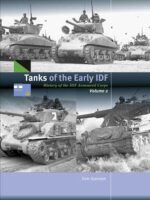
Tanks of the Early IDF. History of the IDF Armored Corps, Vol. 2
46,80 €Vol. 2 continues the story of the early tank types to enter Israeli service.
Following the military victory in the successful War of Independence, the IDF was still in considerable need of weapons, especially tanks and other armored vehicles.
Given the various embargoes and so on, the idea was to take an expedient approach and improve the quality of the tanks in hand while continuing to look for new sources of newer, more modern types. Of course, that would still include the venerable old Sherman, taking advantage of the quantity available around the world and its adaptability for improvements.
This second volume in the series covers two significant upgrades to the overall firepower available with the Sherman, specifically what became known as the M-1 and the M-50, as well as the newly-developed French AMX-13.
While there were still some major technological challenges, as well as limited sources, this process was made somewhat more possible because of corresponding developments within Israels infrastructure.
With 325 pictures. -
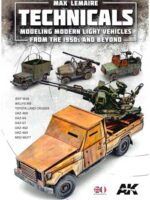
Technicals. Modeling Modern Light Vehicles from the 1950s and Beyond.
34,95 €Modeling Modern Light Vehicles From 1950s and Beyond.
Light vehicles have been a powerful weapon in all conflicts in many different roles.
The conflicts of the modern era have seen the use of light vehicles as another alternative to support the work that only heavier columns can perform.
In this book the talented modeler Max Lemaire teaches us how to make models of these vehicles in 1:35 scale using step-by-step techniques, so that they have the importance they deserve in any scene or as independent pieces.
Content:
JEEP M38
WILLYS MB
TOYOTA LAND CRUISER
UAZ-469
GAZ-69
GAZ-67
UAZ-452
M151 MUTT -
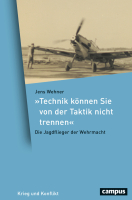
Technik können Sie von der Taktik nicht trennen. Die Jagdflieger der Wehrmacht. Krieg und Konflikt #15
49,00 €The fighter pilots of the Wehrmacht were the »pop stars« of National Socialist propaganda. But what was behind the shiny façade? Jens Wehner throws – sober and balanced – a new light on their military function in air warfare.
His study analyses the military benefits of Messerschmitt and Focke-Wulf fighter types, their tactical application and guiding principles. Comparisons with the level of development of the Allied opponents of the war question the meaningfulness of the pursuit of technical superiority.
This creates the image of a technology that did not meet the expectations placed in it, of a flawed and static doctrine that caused numerous setbacks, and of individualistic pilots who alienated themselves from the military-hierarchical system. -
-

The Army that got away. The German 15. Armee in the summer of 1944
99,00 €This book tells the story of the German 15th Army from its inception in 1942 to its arrival in the Netherlands at the end of September 1944.
It follows the formula of the previous two books, Autumn Gale and Kampfgruppe Walther and so will again be of interest to modellers, tank buffs and fans of military history alike. It also serves as a kind of prequel to the other two books completing the trilogy.
Also, one chapter deals with the fighting in Normandy since the army was involved there until the end of June and so should appeal to anyone interested in that campaign since it contains a lot of new information. This also goes for the main story, never told anywhere before, which fills the gap in the books about World War Two in the West that somehow always skip from Normandy to Market Garden as if nothing relevant happened in between.
The book is only slightly smaller than Autumn Gale with 528 pages, it has over 100 maps and over 900 pictures, most of them never published before.
Contents:
Preface
Introduction
1 The Lull before the Storm (15 February 1942- 5 June 1944)
2 Into battle (6 June 20 June 1944)
3 An army in waiting (21 June 25 August 1944)
4 New Masters and a New Threat (25 28 August 1944)
5 Supercharge (29 August 1944)
6 Grave Danger (30 August 1944)
7 Disaster on the Somme (31 August 1944)
8 Into the breach (1 September 1944)
9 A golden opportunity? (2 September 1944)
10 Operation Sabot (3 September 1944)
11 Antwerp, the Turning Point (4 September 1944)
12 Change of Plan (5 September 1944)
13 Break Out! (6 September 1944)
14 Fall Back! (7 September 1944)
15 The end of a phase (8 September 1944)
16 Firming up (9 – 11 September 1944)
17 Slowing down (12 – 16 September 1944)
18 New Assignments (17 – 23 September 1944)
Conclusions
Sources
Appendix I 15. Armee Order of Battle 1943-1944
Appendix II 15. Armee changes in Order of Battle
Appendix III Divisions
Appendix IV Security Units
Appendix V The Scheldt CrossingsSeparate texts:
The Army Headquarters in Tourcoing (Chapter 1)
The Montes-Gassicourt bridgehead (after Chapter 3)
The French Resistance (after Chapter 7)
The Flying Bomb Threat (after Chapter 8)
The Pocket at Mons (after Chapter 9)
German Forces in Antwerp (Chapter 11)
Frogmen in the Night (after Chapter 11)
The Channel Ports (after Chapter 14)
The Channel Guns (after Chapter 14)
The Air Effort over the Wester Scheldt (Conclusions)
The peregrinations of an artillery unit (Conclusions)
Allowing an army to escape (after Conclusions) -
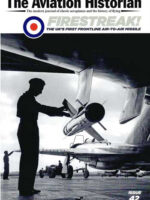
The Aviation Historian Issue 42: Firestreak!
19,94 €Content of issue #42:
Editior’s Letter
Air Correspondence
Selling to Saddam (UK government was invloved in plans to supply a cutting-edge jet fighter design to Iraq)
Dirty Work, Pt 2 (napalm, pesticides, defoliants)
Swedish company Götaverken
The aicraft carrier HMS Eagle & The Chilean Connection
Firestreak! (de Havilland’s BLUE JAY air-to-air-missile)
The Story of UTA, Pt. 2 (France’s post-war independant airline UNION DE TRANPORTS AÉRIENS)
A Real Australian… (a guy born in Australia with Chinese heritage was flying the RAAF’s first night combat sortie in the Boomerang and later became a civilian test pilot for CAC)
Wings are the Wheels of tomorrow! (Evolution of British freighter aircraft form the 1920s to the late 1940s)
Storming Performance (the author examines the the perennial powerplant issues of the Westland Whirlwind).
Breguet’s Monsters (the series of large transports designed by L. Breguet after WW I)
Ghost Fortresses Of The Apocalypse, Pt. 2 (USAF’s use of unmanned B-17s during atomic weapons testing in the immediate post-war period)
Armchair Aviation
Lost & Found
It’s All About That Base
Off The Beaten Track -
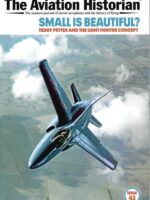
The Aviation Historian Issue 43: Small is Beautiful?
19,94 €Content:
Editor’s letter
Air Correspondence
Teddy Petter & The Case for Shorter Steps /Prof. K. Hayward FRAeS explores the UK’s 1950s procurement dilemma
Excessive Force, pt. 1 /The attacks made by Japanese military aircraft on the airliners of China’s CNAC and Eurasia companies during 1937-41
A Revolutionary Approach British aerial weapons: Iain R. Murray takes a technical look at the UPKEEP weapon used in the famous Dambusters raid 80 years ago
OOH-Là-Là, C’est le Quatre-Mille! Dassault’s Super Mirage 4000, relating how the cutting-edge delta combat aircraft became victim of a classically French existential crisis
Raisng Steam During 1898-1912 Swedish inventor C. R. Nyberg turned his attention to building steam-powered flying-machines
Striving for Accuracy, Pt. 1 RAF’s post-war drive to increase bombing efficiency and the development of new systems for conventional bombing
Spartan’s Olympic Hopeful The elegant 1930s Spartan Executive light tourer is well-known, but it also was used as the basis for an armed military version
Storming Performance pt. 2 Westland Whirlwind fighter: P. Stoddart FRAeS considers, whether fitting new engines might have made the difference
Full Tilt The Weser P.16 tiltrotor
Wings are the Wheels of Today The slow development of British freighter aircraft to a close with a survey of the wartime designs mooted by forward-thinking manufacturers
Argentina’s Big Cats Grumman Panther jet fighter into service in 1958 and later swept-wing Cougar
Nimewacs Anyone? RAF aircraft with the search for a moniker for the ill-starred British Aerospace Nimrod AEW.3
Armchair Aviation
Lost & Found
My First Deck Landing
Off the Beaten Track -
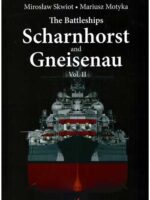
The Battleships Scharnhorst and Gneisenau, Vol. II
59,95 €224 b/w photos, 6 pictures with 3D-optic (with 3D-glasses), 330 computer-animated colour drawings, scale drawings in scale 1:200, 1:100, 1:50, 1:25 and 3 folded sheets with b/w drawings of the Gneisenau 1941 in scale 1:200 and the Arado 196 in scale 1:72.
-
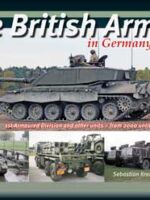
The British Army in Germany. 1st Armored Division and other units – from 2000 until the end
56,80 €The British Army of the Rhine had a presence in Germany for 70 years. With the fall of the Iron Curtain in 1989, all Western forces were drastically reduced. The BAOR was no exception.
This Photo Album celebrates their years through the eyes of a native German whose enthusiasm for British armour, and the huge variety of other military vehicles, shines through. This book covers all arms and services within the British Army based in Germany throughout this period.
The focus lies on the deployed vehicles heavy and light armour, a huge variety of soft-skin logistic vehicles small and large, fighting vehicles and engineer vehicles. From the Challenger 2 Main Battle Tank to the ubiquitous Land Rover, the Lynx helicopter to the M3 Amphibious Bridging Vehicle.
Approx. 1000 color pictures. -
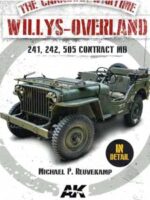
The Canadian Wartime Willys-Overland 241, 242, 505 Contract MB
29,95 €This photo manual with numerous colour photos and historical photographs, is conceived as a quick reference for modelers and restorers and those individuals interested in the more uncommon aspects of the Willys-Overland vehicle model W-LU 440-M-PERS-1, more commonly identified as the Willys MB (model version B) 1/4-ton 4X4 light utility.
Throughout illustrated with b/w pictures and colour pictures (also details!) of a restored museum vehicle. -
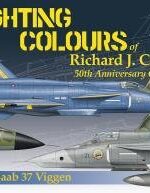
The Fighting Colours of Richard J. Caruana, 1: Saab 37 Viggen 50th Anniversary Collection
22,95 €Internationally renown aviation artist and historian Richard J. Caruana provides a tribute to an often under-appreciated aviation legend, the Saab 37 Viggen, an aircraft that was ahead of its time on many fronts.
This book provides a brief history of the aircraft combined with an exceptional collection of over 56 colour profiles showing schemes worn by Viggens operationally, as well as the special celebratory schemes that became so familiar towards the end of its career. Each profile is accompanied by a detailed caption and a brief operational history.
A page of detailed scale drawings illustrates and explains the different versions of the Viggen and another page illustrates unit markings worn by the type as illustrated in the profiles of the book. -
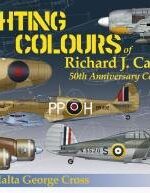
The Fighting Colours of Richard J. Caruana, 2: Malta George Cross 50th Anniversary Collection
22,95 €Maltese aviation artist and historian Richard J. Caruana, who started his career just over 50 years ago, celebrates this special milestone with a work dedicated to his countrys struggle for survival during the Second World War.
Three air battles during that conflict were decided in the air and changed the course of history: the Battle of Britain, the Battle of Malta, and the Battle of Midway. The heroic resistance of this tiny Mediterranean Island denied Rommel and his troops vital supplies, with the result that by the end of 1942 Axis forces had been driven out of North Africa.
This, in turn, provided the Allies with an opportunity to launch the first invasion of mainland Europe, on what Churchill described as Europes soft underbelly: Sicily. When the Allies won a firm foothold on the Italian Island, Malta could finally breathe a sigh of relief and it became a stepping stone for the movement of thousands of troops, aircraft and naval forces to the new frontline in Italy.
A short narrative gives an outline of the Battles history which is then illustrated with close to 200 colour profiles and other drawings. -
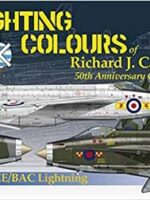
The Fighting Colours of Richard J. Caruana, 3: EE/BAC Lightning 50th Anniversary Collection
22,95 €Richard J. Caruana describes and illustrates the Lightning in his inimitable way, a tribute to an aircraft whose retirement from service marked the end of a long tradition of single-seat interceptors in the Royal Air Force.
-
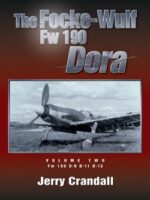
The Focke-Wulf Fw 190 Dora, Vol. 2: Fw 190 D-9, D-11, D-13
136,00 €Volume 2 contents a large section on colour and markings, an overview of technical features of the Dora aircraft, photoes and stories of Doras that served in JV 44 including newly discovered photoes, featuring Red 13 W.Nr. 213240. New photographs of D-11s with colour profiles. Highlights of the Fw 190 D-13 Yellow 10 with new photoes and recoveries of aircraft featuring construction, colour and markings, pilots and units are included as well as a complete set of 1/48th scale three view drawings newly updated by Koichiro Abe and an up to date Werknummern listing including Loss Records.
Volume 2 (previously anounced under the title Focke-Wulf Fw 190 Dora – D-9, D-11, D-13, Vol. 2) contents:
1. More photos of Fw 190 Doras from miscellaneous and unknown units, many previously unpublished
2. Dozens of profiles and scrap artwork by Thomas A. Tullis
3. A large section telling the story of JV 44 and the Doras of the Galland Circus with corrections and updates including new previously unpublished photos
4. New information and unpublished photos on the Fw 190 D-11
5. Detailed story of the rare Fw 190 D-13 and Yellow 10 with new unpublished photos
6. Large section devoted to color and markings including color photos of excellent recovered aircraft part samples with camouflage paint
7. Patterns and colors used by the factories that produced the Fw 190 Doras with the appropriate national markings
8. Recognition bands, tactical and I.D. bands in full color
9. Actual patent papers filed by Warnecke and Böhm to register their break-through one-coat paint formula of polymer resin paint for better adhesion to aluminum and magnesium
10. Original existing paint formulas developed by Luftwaffes premier paint company Warncecke and Böhm of RLM colors
11. Many technical features of main parts such as landing gear variations, etc.
12. Reports of unit operating the D-9 in service describing technical problems
13. A compilation featuring the study of recovered D-9s listing colors, units, pilots and technical details