
-

The French Fleet. Ships, Strategy and Operations 1870-1918
65,00 €The book provides a complete overview of the French Navy from the establishment of the Third Republic to the end of World War One. French foreign and naval policy, shipyards and industrial organisation, technological innovations, operations and shipbuilding programmes are all described in the first part of the volume, while the second and larger part is focused on the different categories of warships, including their qualitative and quantitative evolution during the period of 18711918 and their employment during the Great War. A chapter is also dedicated to naval aviation.
Superbly illustrated with rare and carefully selected photographs, this major new reference book paints a clear and detailed overview of the French navy during this era and will stand as a vital companion to French Warships in the Age of Steam 18591914 published by Seaforth.
With 230 illustrations/photos. -
The French Fleet. Ships, Strategy and Operations 1870-1918
65,00 €The book provides a complete overview of the French Navy from the establishment of the Third Republic to the end of World War One. French foreign and naval policy, shipyards and industrial organisation, technological innovations, operations and shipbuilding programmes are all described in the first part of the volume, while the second and larger part is focused on the different categories of warships, including their qualitative and quantitative evolution during the period of 1871–1918 and their employment during the Great War. A chapter is also dedicated to naval aviation.
Superbly illustrated with rare and carefully selected photographs, this major new reference book paints a clear and detailed overview of the French navy during this era and will stand as a vital companion to French Warships in the Age of Steam 1859–1914 published by Seaforth.
With 230 illustrations/photos. -
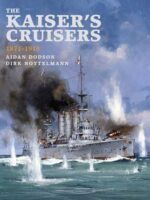
The Kaiser’s Cruisers, 1871-1918
54,00 €While bookshelves groan with works on the capital ships of the German Third Reich, there is little in English devoted to their predecessors of the Second Reich, so this new book will fill a clear gap in its study of German cruisers of the period, from wooden-hulled corvettes, through the fusion of ‘overseas’ and ‘home’ vessels into the modern small cruisers that evolved and fought in the First World War.
The book covers the full range of cruising vessels operated or ordered by the Imperial German Navy between 1871 and 1918, excluding the large cruisers, previously covered by the author’s companion volume The Kaiser’s Battlefleet. These include corvettes, avisos, sloops, torpedo cruisers, III- and IV-class cruisers and small cruisers, and are described and arranged in a chronological narrative. This includes both design and operational histories, the latter continuing down to the end of ships’ service after the fall of Imperial Germany, and it is accompanied by an extensive selection of many rare photographs. The ships’ technical details are tabulated in the second half of the book which also includes sketches of ships’ internal layouts and armour and changes in appearance over time.
The authors have made extensive use of archival material, particularly relating to the political and technical background to design and procurement, and present a developmental history of this ship class which is unique in the English language. It will have huge appeal to all those with an interest in the German navy and to those who have been waiting avidly for the sequel to The Kaiser’s Battlefleet.
175 illustrations, 50 line drawings. -
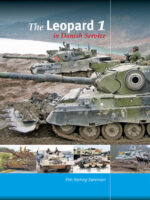
The Leopard 1 in Danish Service
69,95 €This is a major 340-page work looking back over the whole career of the Leopard 1 from beginning to very near the end (some versions are still in service). It has been written by a former Danish Leopard 1 tank commander and an active officer of the Jutland Dragoons Regiment.
In 1953, the Centurion Mk.V tank became the standard main battle tank of the Danish tank squadrons. At that time, it was a modern tank, but in the middle of the 1960s the development of tanks had moved on, both in NATO and within the Warsaw Pact.
In the spring of 1974, the decision to procure 120 Leopard 1A3s for the tank squadrons of the Jutland Division was made. The Cold War was on and the new tank would serve alongside the venerable Centurion for a while. At operational level in the 1970s and 1980s, the main wartime strength of the Danish Army was organised into five brigades, each with 40 main battle tanks. The Leopard tank was, at that time, solely used by the three mechanised brigades of the Jutland Division. The two brigades in Zealand were still using Centurion.
However, the decision to completely replace Centurion had to be made so further Leopards were acquired from ex-Bundeswehr stocks. All of the Danish Leopards were brought up to modern standards with the introduction of the Leopard 1A5DK. Following the cessation of the Cold War, Denmark would take an active role in peacekeeping missions with the United Nations, followed by IFOR, SFOR and
KFOR, going on to serve in Afghanistan with their replacement Leopard 2s but still supported by Leopard 1 variants.
This book covers all aspects of the Danish Leopard 1 family with a thorough look at the initial trials, the tanks introduction into service, technical problems, training exercises, maintenance and modifications. Each of the different variants and their
capabilities are examined, as well as camouflage and markings, crew dress, training equipment and the Leopards tactical and strategic mobility.
Over 1.400 photographs and diagrams. -
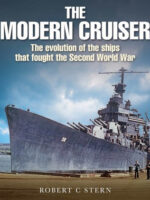
The Modern Cruiser. The Evolution of the Ships that fought the 2nd World War
45,00 €This book sets out to provide a coherent history of the fortunes of this ship-type in the twentieth century, beginning with a brief summary of development before the First World War and an account of a few notable cruiser actions during that conflict that helped define what cruisers would look like in the post-war world. The core of the book is devoted to the impact of the naval disarmament treaty process, which concentrated to a great extent on attempting to define limits to the numbers and size of cruisers that could be built, in the process creating the treaty cruiser as a type that had never existed before and that existed solely because of the treaty process.
How the cruisers of the treaty era performed in the Second world War forms the final focus of the book, which concludes with a look at the fate of the cruiser-type since 1945. The result is probably the best single-volume account of the subject to date. -

The Russian Army on Parade 1992 – 2017 (= Vol. 3)
49,00 €This third and final volume describes the post-Soviet Russian military parades held in Moscow from 1992 until 2017, completing a century of full-scale mechanised military parades on Red Square, at a time when demonstrating the defensive capability of the nation was, as in 1918, and in 1941, again deemed a strategic requirement in an uncertain world.
With more than 1.000 colour pictures. -

The Shay Locomotive. An illustrated History
125,00 €The Shay Locomotive – An Illustrated History is the most complete, thorough, and accurate book ever produced on this unique and storied locomotive. The authors have spent decades researching, collecting photos, and organizing the information in this all-new volume. The book features:
-More than 600 pages More than 1000 photos, illustrations, and drawings
-Complete listing of every Shay built by shop number, by owner/operator, and by location
-Limas involvement in the Shay from the first locomotive by Ephraim Shay in 1881 to the last Shay built in 1945
-Photographs of every single surviving Shay
Appendices of Patents, Drawings, and Specifications
Wrecks and mishaps
Mechanical evolution, and so much more! -

The Tank Battles of Marshal Rokossovsky 1943-1945
28,95 €Konstantin Rokossovsky was one of the most talented commanders of the Red Army. He and his units fought in many major battles, including Kursk, Bobruisk and East Prussia. Kamen Nevenkin’s richly illustrated study examines the most important battles between 1943 and 1945.
With 163 b/w pictures and 10 maps. -

The US-Air Force Air Rescue Service. An illustrated History
68,00 €This definitive work on air rescue operations of the US Army Air Force and US Air Force takes the reader from the birth of the service during World War II, through the Korean and Vietnam Wars, to present-day operations in Iraq and Afghanistan. Detailed text, accompanied by numerous photos–including many never before published–presents all aspects of air rescue operations, from the service’s founding, specialized training and equipment, and discussions of such varied aircraft types as the Stinson L-5, Douglas SC-47, Douglas HC/SC-54D Rescuemaster, Fairchild SC-82A Packet, Boeing HC-97G Strato-Rescuer, Bell H-1 Huey, Sikorsky H-3 Jolly Green Giant, and many more. During the Cold War, this air arm expanded greatly and added the new mission of astronaut recovery through the early years of the US space program, as well as providing humanitarian aid during natural disasters worldwide. Air rescue came into its own during the war in Vietnam, when it became a highly skilled and effective force, rescuing thousands of fliers downed in combat, along with beleaguered ground troops. The present USAF air rescue service continues to live up to its motto That Others May Live.
280 color and b/w photos. -

Tiere in Uniform. Tierische Helfer und Ihre Ausrüstung bis 1945
29,90 €Animals have been companions of humans since time immemorial as farm animals, protectors and friends. In the history of animals, many have been used for military use. In this book, Barbara Maiwald documents the use of animals in the German armed forces from the end of the 19th century to 1945.
Structured according to the most important animal species, it describes their tasks in the military (in combat, as a draught animal, in reconnaissance and reporting, etc.) as well as their necessary equipment. It also explains the important function of animals in raising troop morale.
With 180 pictures (also some of them in colour (from nowadys), showing the equipment of the animals). -

Tiger and Panther Tanks. German Panzer Profiles by Claes Sundin
36,80 €This book presents 64 stunning profiles of Panther and Tiger tanks and follows the general layout of the three previous profile books.
The reader will find profiles of Tiger I and Tiger II, Panther Ausf. D, A and Gs.
Glossy hard bound cover, full color printing, 70 pages and more than 60 additional artwork, informative text of each and every profile included and much more. -

Tous les Panhard Militaires 1914-1940
24,95 €This book is the fourth in a collection designed to cover all the vehicles used by the French Army from 1914 til 1940. Each book, presents all the vehicles in a systematic way, following a chronological classification, the main ones being rendered in coloured drawings.
-

Transportflugzeuge aus der Sovietunion
29,90 €The war in Ukraine has brought Russia’s military capabilities back into the focus of the general public. Air transport capacities are also central to this. During the Soviet Union, enormously powerful aircraft were created, including the legendary Antonov An-225 (a single piece), which was tragically irretrievably destroyed during the fighting.
Michael Normann, himself a former member of the NVA, describes here in a proven expert and detailed manner the flying transporters from Soviet times, many of which are still in use today. An up-to-the-minute reference book.
with 180 pictures. -

Tupolev TU-22M. Soviet/Russian Swing-Wing Heavy Bomber
79,95 €In the late 1960s, the patriarch of Soviet aircraft design, Andrey Tupolev, offered the Soviet air force a supersonic bomber to replace the 1950s-vintage Tu-22 Blinder with a less capablebut cheaperalternative to the Sukhoi design bureau’s proposed T-4 strategic bomber. Tupolev did not offer it as an all-new aircraft but, instead, passed it off as a massive upgrade of the Blinder.
Thus was born the Tu-22M, Tupolevs first aircraft with variable swept wings and the ability to carry both bombs and supersonic cruise missiles. In the West the new bomber became known as the Backfire. First flown in 1969, the aircraft entered production in 1972. The most widespread version was the Tu-22M3, which soldiers on today with the Russian air force. The Backfire has had an active career both in Cold War operations and in hot wars, from Afghanistan to Syria, where it has participated in the global war on terrorism.
This book describes the Tu-22Ms development, including the latest upgrades, and its Soviet and post-Soviet operations. Fleet lists are included, as is a detailed design description, and a wealth of color profiles and line drawings.
840 color, b/w photos, profiles, and line drawings. -
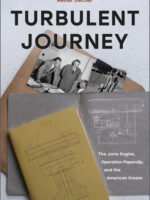
Turbolent Journey. The Jumo Engine, Operation Paperclip and the American Dream
37,95 €Germany built the first operational jet aircraft during World War II, the Messerschmitt Me 262. Siegfried Decher was part of the engineering team that designed the engines that powered the 262. At the end of the war, Decher was nearly stranded in the Soviet Occupation Zone, but the US military made contact and offered a way out. As the principal responsible for a control system in the Jumo engine, Decher was of value to the Allies. Plans to evacuate during Operation Paperclip fell through. After a detour in France, Decher reached American shores several years later, where he enjoyed a successful career in the civil aviation industry.
This untold story of early jet development, surviving the collapse of the Reich, and starting over in America is recounted by Siegfried’s son, Reiner. Reiner, an accomplished engineer in his own right, constructs the story through a combination of his own memories and original letters and documents from his family archive.
48 b/w pictures, 18 b/w drawings, 1 map. -

U-552. Das Boot der roten Teufel. Eine Einsatzdokumentation in Fotos.
68,00 €U-552 was one of the legendary U-boats of the Second World War. Under its commander Erich Topp, it carried out a total of ten operational patrols, sinking 30 ships and damaging three in a period of 20 months. In the days of the big convoy battles, when the Allies detection technology had not yet been perfected, before the German radio codes had been broken, and convoys were not or at best weakly escorted, Topp was among the U-boat arms most successful commanders. Within 16 months he was decorated with the Knights Cross, the Oak Leaves and the Swords.
U-552, the boat with the Red Devil emblem, was probably photographed more by war reporters than any other U-boat. Despite its fame during the war, until now there has been no comprehensive history of U-552. Our book changes this. Photos from almost all of the boats patrols, a war cruise chronology including the period after Topp, and a description of special occurrences together form a special U-boat book. Color graphics round out the book.
318 pictures, 18 color maps and about 6 color graphics. -
-

U-Boot im Focus Nr. 07
19,60 €U-Boote im Focus is a magazine covering WW-2 German Navy submarine subjets, which is created by the same team that publishes Luftwaffe im Focus. It is published two times a year. Each volume contains about 80 previously unpublished photographs (most of them b/w) from private collections with detailed information in German and English (some volumes can also be obtained in French), as well as articles to special WW-2 submarine subjects. Contemporary colour photographs are also shown as well as colour profiles (a. o. in the centerfold), badges, markings and so on. The photographs are presented in large scale and high quality on art-print-paper. The comprehensive background-information makes each volume essential reading. A booklet for all historians and model builders as well.
-

U-Boot im Focus Nr. 08
19,60 €U-Boote im Focus is a magazine covering WW-2 German Navy submarine subjets, which is created by the same team that publishes Luftwaffe im Focus. It is published two times a year. Each volume contains about 80 previously unpublished photographs (most of them b/w) from private collections with detailed information in German and English (some volumes can also be obtained in French), as well as articles to special WW-2 submarine subjects. Contemporary colour photographs are also shown as well as colour profiles (a. o. in the centerfold), badges, markings and so on. The photographs are presented in large scale and high quality on art-print-paper. The comprehensive background-information makes each volume essential reading. A booklet for all historians and model builders as well. Contents:
Readersforum: U-575, Emblem
Typ II D Boote: U-143, 1941
Typ VII A Boote: U-30, 1941
Typ VII C Boote: U-376, 1942, U-376, Gästebuch, U-223, 1943
Typ IX A Boote: U-37, 1940
Electric Boats: U-2502, U3514, U-2511, 1945
Conning Towers: U-83 mit Streifentarnung im Atlantik und Mittelmeer
Unusual: Schildkrötenjagd trotz Luftbedrohung
Color Photos: U-Krech kehrt von der 7. Feindfahrt zurück
Boat in Focus: U-141 – ein II D Boot im Nordatlantikeinsatz
Documents: Der Weihnachtsgruß der 3. ULD
Unknown Emblems: Das Marienkäfer-Emblem von U-929
Scenery: Kommandantenfrühstück auf der Brücke
Fate: Gesunken durch Mine vor Salamis – der tragische Untergang von U-133