
-
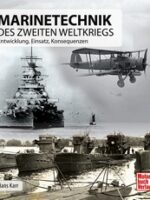
Marinetechnik des Zweiten Weltkriegs. Entwicklung, Einsatz, Konsequenzen
34,90 €Before and during the Second World War, naval technology underwent perhaps its most fundamental change: proud battleships such as the Bismarck or the Yamato were soon only suitable as museum pieces after the advent of aircraft carriers. Many developments, such as the use of submarines, were based on the experience gained during WW1.
Hans Karr traces the important technological developments of weapons up to the end of WW2. Starting with the submarines and surface forces up to the advances in weaponry in armament above and underwater, he explains their fundamental change in meaning.
Throughout illustrated with b/w pictures, colour pictures as well as tables. -

Mehrzweckkampfflugzeuge weltweit
24,90 €Multi-role fighter jets are universally applicable and not fixed on one role. It is not for nothing that they are considered the most potent fighter planes ever:
Airspace defense, attack role, reconnaissance or electronic warfare, they can compete virtually with any enemy and are now the measure of all air forces. Equipped with an impressive arsenal of weapons, they also have state-of-the-art reconnaissance equipment.
The author presents this aircraft category in the usual expert manner with rare, partly unpublished photos, data, three-sided b/w drawings and colour profiles.
With 180 b/w and colour pictures. -

Messerschmitt Bf 108. Von der Taifun zur Pingouin und Noralpha – Eine technologische und chronologische Entwicklungsgeschichte
84,00 €The Messerschmitt 108 Typhoon was developed in 1934 for the European flight. In 1936, these prototypes were turned into the production version Bf 108 B-1, which, due to its numerous innovations, represented a milestone in the evolution of sports and touring aircraft and is still regarded today as a model for many modern aircraft in this class. Willy Messerschmitt had been known since 1927 as the designer of numerous innovative and famous aircraft.
Important for the sales success of the Typhoon were the numerous exports abroad, which made the name Taifun known worldwide.
As a non-war aircraft, production was moved to France in 1942. After the liberation of France, production continued under the name Nord 1000/1001/1002 Pingouin.
The last aircraft of this type, which was also very popular with the French Air Force, rolled off the production lines in 1951. In France, the Nord 1100/1101 Noralpha with nose wheel landing gear was built according to German plans from 1946 to 1948.
975 pictures, 574 of them b/w and 401 in colour. The colour profiles of all variants are made of Herbert Ringlstetter, who is well known for his illustrations. All images used, have been digitally prepared and revised by Rolf Schneider. -
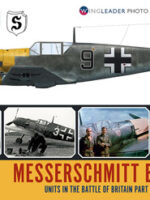
Messerschmitt Bf 109E Units in the Battle of Britain Part ONE JG2, JG3 JG26. Wing Leader Photo Archive Number 2
27,50 €This book is the first of three in our Wingleader Photo Archive series devoted to Bf 109 Units in the Battle of Britain. This is a project that the publisher is actually working on some years ago but which stalled through the lack of decent photographs. With the launch of the new Wingleader series, they saw a way of revitalising the project using all the profiles that had been prepared, and introducing a lot of newly discovered 109 photos.
The result is slightly different to the Spitfire MkI book in that this one concentrates on the units rather than the history of the aircraft itself. The great thing is that each Staffel has a specially commissioned profile by renowned digital artist Piotr Forkasiewicz, (39 in this book alone and 8 extra pages because of it), making it a remarkably colourful read in every way.
The aim of this book is to help the reader identify and understand the various styles of camouflage and markings used by the Bf 109 units during the Battle. Some had large numerals, some small, some had heavily mottled sides, others pale blue. Most had emblems and some carried both the Gruppe and Staffel emblems at the same time. The colours of the markings were also significant of course, and again this book explains the system behind them. Do have a look at our sample pages below to see how it looks inside, it’s probably one of the most colourful books we’ve ever published! -
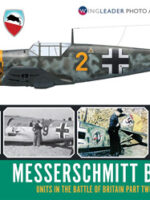
Messerschmitt Bf 109E Units in the Battle of Britain Part TWO JG27, JG51, JG52. Wing Leader Photo Archive Number 4
26,80 €This book is the second of three in our Wingleader Photo Archive series devoted to Bf 109 Units in the Battle of Britain. It covers JG27, JG51 and JG52. This is a project that we were actually working on some years ago but which stalled through the lack of decent photographs. With the launch of our new Wingleader series, we saw a way of revitalising the project using all the profiles that had been prepared, and introducing a lot of newly discovered 109 photos.
The aim of this book is to help the reader identify and understand the various styles of camouflage and markings used by the Bf 109 units during the Battle. Some had large numerals, some small, some had heavily mottled sides, others pale blue. Some had emblems and some carried both the Gruppe and Staffel emblems at the same time.
Approx 120 photos and 39 full colour profiles. -
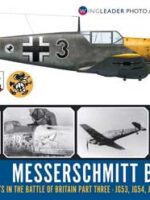
Messerschmitt Bf 109E Units in the BofB Part 3: JG53, JG54 JG77, LG2, EprGr210 Wing Leader Photo Archive 9
26,80 €This book is the third and final part of our Wingleader Photo Archive series devoted to Bf 109 Units in the Battle of Britain. It covers JG53, JG54, JG77, LG2 and EprGr210.
-

Messerschmitt Me 321, Me 323 Gigant.Technik- und Einsatzgeschichte
49,90 €This title is also available in ENGLISH language for the price of 98,00 Euro (same number of pages and photographs!)!!!
This massive hardcover book describes the history, design, production, and combat service of all versions of the Gigant, starting with the glider version known as the Me 321 and then the motorized version known as the Me 323 Gigant or (Giant) which was the largest transport aircraft built during World War II.
This massive photographic study is 440 pages and includes 745 wartime black and white photographs (many which are being published for the first time) and 14 rare color photographs taken during the war.
In addition there are approximately 100 color profiles in both 2D and 3D showing the Me 321s, Me 323s and various versions of the Bf 110 and He 111Z aircraft that were used to tow the Me 321 glider. , and 12 B+W technical drawings. Also presented are 34 unit insignia and names of some aircraft, 10 tables with produced aircraft and their assignment to units, tables with codes of the aircraft produced during WWII, 5 organigrams, and 21 maps showing areas where the Gigant operated and had its losses during some operations. -
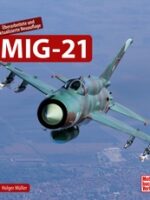
MiG-21. Überarb. und aktualisierte Neuauflage!
29,90 €The MiG-21 was the air superiority fighter of the East and virtually all Warsaw Treaty states used this enormously versatile fighter aircraft. In countless versions, the agile machine stood up to its Western counterparts for decades and was a feared opponent. More than 10,000 copies of all variants were produced. This makes the MiG-21 one of the most built fighter aircraft after the 2nd World War to this day. The NVA (National Poeple’s Army) also had around 500 machines in use.The MiG-21 was exported to 43 states, several countries also produced the type under license.
This is with 210 (mostly) colour pictures a revised and updated edition up to date! -
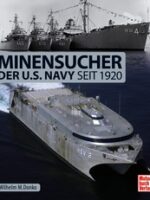
Minensucher der U.S. Navy seit 1920
29,90 €The U.S. Navy is now undeniably the largest and most powerful in the world with its impressive aircraft carriers, state-of-the-art cruisers and destroyers. Astonishingly, mine sweepers have been neglected in recent decades.
In this documentary, Wilhelm M. Donko presents all U.S. Navy mine sweeping vessels by type and class and describes all units that were ever classified as such from the interwar years til Second World War to the present day.
With 250 (mainly) b/w pictures. -
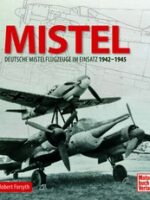
MISTEL – Deutsche Mistelflugzeuge im Einsatz 1942 – 1945
39,90 €An informative and illustrated volume about the mysterious mistletoe concept. It was originally known as mistletoe towing, in which a smaller powered aircraft was first mounted on a larger cargo glider. In the course of development, the cargo glider was replaced by converted bombers with their own propulsion. The focus is on the German developments of the Second World War, where the method was developed militarily very far and also used.
This German translation is based on the 2nd revised and enlarged English edition!!! -
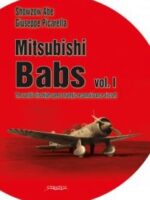
Mitsubishi Babs Vol. 1. The world’s first high-speed strategic reconnaissance aircraft
54,79 €This book was written to redress this imbalance and tell the true story behind the development and operational deployment of the worlds first high-speed strategic reconnaissance aircraft, which began 6,000 miles further east and four years prior to the momentous events in Europe, under the guidance of the Imperial Japanese Army and Mitsubishi Heavy Industries Co Ltd. Faced with similar preconceptions, technical arguments, and a very rigid operational doctrine, the Mitsubishi Babs was developed during a brief golden aeronautical period (between the mid 1930s and early 1940s), when the Japanese aircraft industry flourished under constant military aircraft competitions and production orders. Free from prying eyes and shrouded within a self-imposed veil of secrecy, the Japanese developed numerous designs that were equal to and in some cases ahead of contemporary Western manufacturers.
This book is the most comprehensive on the Babs yet published in English, with numerous photographs of the aircraft in service, several of which have never been published before, walkaround photographs of the preserved aircraft, illustrations from contemporary manuals, and color artwork. -

Modern South Korean Air Power | The Republic of Korea Air Force Today
39,95 €Since the early 1950s, the heavily industrialised nation of South Korea has seen steady growth and is now the worlds seventh-largest exporter and 11th-largest economy overall. As the Cold War on the Korean peninsula gathered momentum, the development of the Republic of Korea Air Force became one of the nations top priorities. While initially dependent on the United States for its aircraft, Koreas aviation industry has matured rapidly, and the ROKAFs use of indigenously manufactured equipment is on the rise.
Modern South Korean Air Power provides a detailed look at the aircraft and armament, as well as the organisation and the modernisation process of the ROKAF. The air arm has invested heavily in its early warning and intelligence-gathering capability to guard against the unpredictability of its northern neighbour.
A territorial dispute with long-standing rival Japan, as well as incursions into its airspace by both China and Russia, have fuelled the need to transform the ROKAF into a technologically superior force.
In its ongoing efforts to maintain its edge, the ROKAF has introduced fifth-generation stealth fighters while at the same time still making effective use of obsolete biplanes. It is this wide variety of aircraft and helicopters that make this air arm one of a kind.
This book is a highly informative and richly illustrated source of reference and documents the ROKAF in a previously unavailable degree of detail. It provides an insightful and in-depth look at the journey the service has embarked upon to face the regional security challenges of tomorrow.
With 2 b/w and 179 colour pictures, 8 tables and graphs plus 2 maps. -

Myasishchev M-4 and 3M
56,00 €When the Myasishchev design bureau was reborn in 1951, it was immediately tasked with creating a high-speed strategic bomber to balance the threat posed by NATOs heavy bombers, notably the B-52. Designated M-4 and code-named Bison by NATO, the new four-turbojet bomber was developed within an incredibly short timejust one year. It made use of many innovative features, including a bicycle landing gear, and was designed around the most powerful jet engine of the day. It became the progenitor of a small family of bombers and refueling tankers, including the much-improved 3M and its versions. Many of the intended versions never materialized, and the Bison had its share of problems, but it came at just the right time, providing a valuable nuclear deterrent, and remained in service for 40 years until retired in compliance with the START treaty. The book charts the first Soviet strategic jet bombers development and operational history. It includes the story of how the 3M was adapted to carry components of the Energiya/Buran space transport system as the VM-T Atlant outsize cargo transporter.
Throughout illustrated with b/w and colour pictures, b/w drawings and colour profiles. -
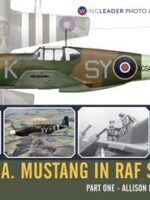
N.A. Mustang in RAF Service, pt. 1.: Allison Engined Variants Wingelader Photo Archive Number 22
27,95 €The publisher decided to split the project into two titles, one covering the Allison engined Mustangs, the other covering the Merlin powered examples.
For this first book, we approached Colin Ford who is well known as an expert on all aspects of the Allison engined Mustang in RAF service. Building on Andys solid foundation of photo research, the author has introduced his broad technical knowledge of the subject along with many rare and unseen photos from his own collection, with the result being a worthy tribute to the Mustang Mk I, Mk IA and Mk II and the pilots that flew them.
With approx 120 photos and 6 colour profiles. -
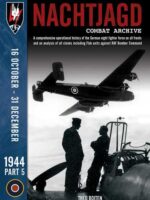
Nachtjagd Combat Archive 1944, pt. 5: 16 October – 31 December 1944
27,50 €This volume is the last of five volumes to cover 1944, a year where the tables finally turned against the Nachtjagd, but not before it had inflicted terrible losses upon RAF Bomber Command. This volume shows the decline of the Nachtjagd as a force and the increasing losses inflicted by Allied intruders as the hunters became the hunted.
Throughout illustrated with b/w pictures. -
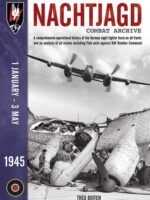
Nachtjagd Combat Archive 1945 1 January – 3 May 1945
34,95 €The Nachtjagd Combat Archive is possibly the largest WWII aviation project ever published running to over 1.3 million words with over 1200 original photos, a remarkable 70% of which are previously unpublished.
This volume covers 1945, when the Nachtjagd was finally defeated by overwhelming odds in the air and lack of fuel on the ground. -

Nachtjagd Combat Archive. Eastern Front and Mediterranean A compreh. operat. history of the German night fighter force on al
34,95 €Mit diesem ersten Band erscheint ein zusätzlicher Teil der äußerst beliebten Nachtjagd Combat Archive-Serie, die die deutschen Nachtjägeroperationen sowohl an der Ost- als auch an der Mittelmeerfront abdeckt. Dies ist eines der ersten Bücher überhaupt, das dieses Thema im Detail behandelt und die gleichen Forschungsstandards anwendet wie der Rest der Serie.
Die Nachtjagd Combat Archive-Serie selbst ist möglicherweise das größte jemals veröffentlichte Luftfahrtprojekt aus dem Zweiten Weltkrieg mit über 1,3 Millionen Wörtern und über 1200 Originalfotos, von denen bemerkenswerte 70% bisher unveröffentlicht sind.
In einfachen Worten gesagt, ist die NCA-Hauptserie eine umfassende Aufzeichnung von über 6000 Nachtjägerabschüssen der Luftwaffe und über 2100 Flak-Abschüssen, die sorgfältig mit den Verlusten des RAF Bomber Command abgeglichen wurden, was dazu führte, dass über 95% von ihnen jetzt identifiziert wurden. Dies bedeutet, dass zum ersten Mal überhaupt das Schicksal der überwiegenden Mehrheit der Verluste des RAF Bomber Command mit genauen Standorten, Zeiten und Identitäten der Piloten oder Flak-Einheiten, die für ihren Absturz verantwortlich sind, klar verstanden werden kann.
Mit 80 s/w Fotos (je zur Hälfte Flugzeuge und Personen), drei farbigen Personenfotos, sowie 2 farbigen Kartenskizzen. -
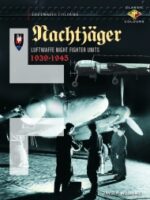
Nachtjäger. LW Night Fighter Units 1939 – 45 (Classic Colours)
36,80 €This is a compendium edition of the highly regarded and long out of print Nachtjäger volumes in the acclaimed Classic Colours series on the aircraft, camouflage and markings of the Luftwaffe between 1939-1945. The book focuses on the operations and the aircraft of the Nachtjagd from its origins in the inter-war years, to its formation as an embryonic and innovative force in 1939 and through its desperate and climactic battles against the massed raids of RAF Bomber Command from 1939 onwards. The force evolved from using single-seat Bf 109s to twin-engined Bf 110s and Ju 88s, fitted with technically advanced radar equipment and weapons systems, supported by a sophisticated ground reporting network.
It produced many leading night fighter aces such as Wolfgang Falck, Heinz-Wolfgang Schnaufer, Helmut Lent and Hans-Joachim Jabs. As the war progressed and the strategic situation began to tilt away from Germanys favour so, ironically, the pace of development quickened with the Luftwaffe introducing uprated versions of the Ju 88 as well as new types such as the Do 217 and He 219. In the last, desperate months of the war, even the Me 262 was introduced as a night fighter in limited numbers. Nachtjäger is an important resource for modellers and students of Luftwaffe history, providing a detailed narrative augmented by many photographs and specially commissioned colour profiles.
420 photos & colour artworks. -

Navy Ops, Bd. 01/2021. Flugzeugträger im Einsatz
8,90 €Content of issue 001:
Die HMS Queen Elizabeth, das neue Flaggschiff der Royal Navy
Superträger USS Nimitz und USS Theodore Roosevelt im Südchinesischen Meer
USS Tripoli (LHA-7), der neueste amphibische Träger der America-Klasse
Der italienische Flugzeugträger ITS Cavour vor der US-Ostküste bei einem Testprogramm zur Aufnahme des Kampfflugzeuges F-35B an Bord
Griechische und amerikanische Luft- und Seestreitkräfte beim Manöver im Östlichen Mittelmeer
Fregatte Schleswig Holstein der Brandenburg-Klasse
Die McDonnell Douglas F/A 18 Hornet
Entwicklungsgeschichte der modernen chinesischen Zerstörerklasse des Typs 52, die an westliche Luftabwehrschiffe angelehnt ist
die bisher fünf zu Wasser gelassenen Jagd-U-Boote der britischen Astute-KlasseTroughout illustrated with color pictures.
ONLY GERMAN TEXT!!!!! -

Navy Ops, Bd. 02/2021. Die neue Gerald R. Ford-Klasse
8,90 €Content of issue 02:
Die Gerald R. Ford-Klasse
Die dt. Fregatten der Baden-Württemberg-Klasse
Die Schiffe der Asahi- und der Maya-Klassen (Zerstörer)
Neuigkeiten aus aller Welt rund um Flugzeugträger
Die P-8A Poseidon (ein U-Boot-Jäger)
Die franz. Marine und ihr Flugzeugträger, sowie drei amphibische Hubschrauberträger
Technische Anforderungen für die nächste Generation der nuklear angetriebenen Jagd-U-boote bei der US Navy
USS Intrepid
Maritimes Bauprogramm der Volkrepublik China mit Schwerpunkt auf Flugzeugträgern
HMS Queen Elizabeth
Die Drohne Boeing MQ-25, die als Tankflugzeug auf Flugzeugträgern der US-Navy eingeführt werden soll
ONLY GERMAN TEXT!!!